Exhibition of American daguerreotype portraits in Bry

Celebrates the first American Photographers
|
This is the first public display of photographs in the Daguerre Mansion (right), located in the City of Bry-sur-Marne, outside of Paris. A newly-renovated gallery in the historic home provides a showcase for 80 American portrait photographs produced by the daguerreotype process invented by Daguerre. These images, made during the 20 years before the Civil War, display the inventiveness and creativity of the American daguerreotype artists who helped build an entirely new medium based on Daguerre’s invention. The exhibition includes the only documented portrait from the world’s first photography studio, as well as a selection of rare images portraying Americans at work in occupations ranging from newsboy to cabinetmaker to telegraph operator. |
||
|
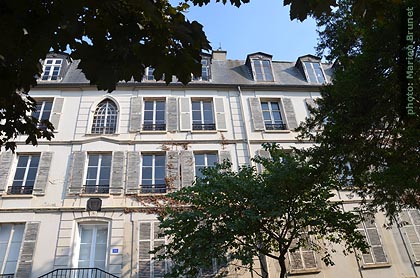 The home of Louis J. M. Daguerre, inventor of the first practical process of photography, is the location of a new exhibition, Le Portrait Daguerrien en Am�rique/The Daguerreian Portrait in America. The exhibition runs from September 14 through December 1, 2013.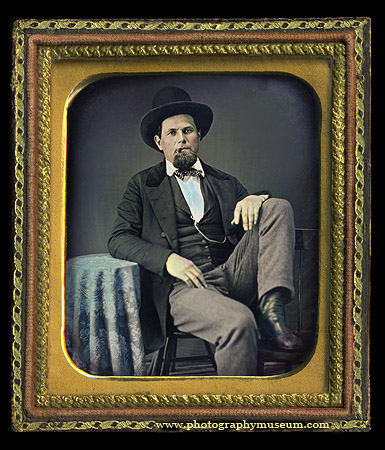
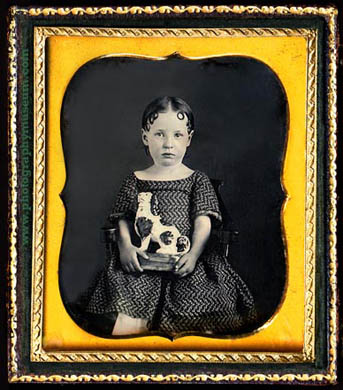
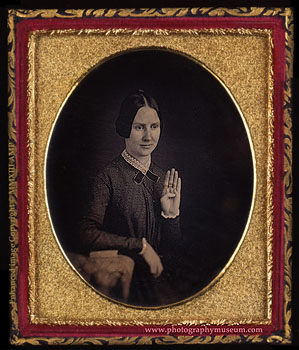 also included in the exhibition at Bry: also included in the exhibition at Bry:
Susan Helen Aldrich De Kroyft (1818-1915) Mrs. De Kroyft married a young doctor in Rochester, New York who was gravely ill at the time of the ceremony. Shortly after the couple said their vows, he died. Within a month, she became blind. Mrs. De Kroyft spent the rest of her long life writing about her experiences, and traveling around the country selling her books– turning her personal tragedy into a career as one of the best-selling self-published authors in American history.
|
|
The two parts of the exhibit combine to tell the story of American portrait photography, from its earliest days, when a mere likeness was enough to attract an excited crowd… to the end of the 19th century, when portraits became less about outward appearance and more about projecting a character, personality, or mood. |
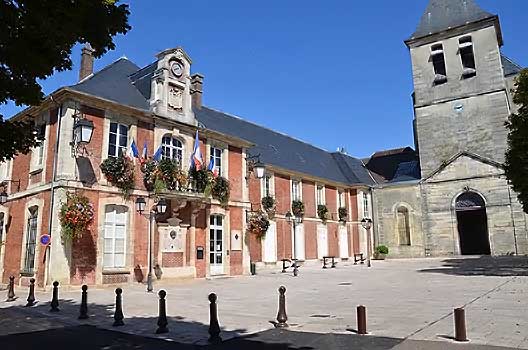 The exhibition in the home of Daguerre continues with more than 130 American photographic portraits, 1840s to 1900, on display in the historic Mairie (City Hall) in nearby Lagny-sur-Marne. Featured in this grand space are images of family life, group portraits, and images that capture the way Americans expressed their character and identity when facing the camera. A selection of manipulated photographs includes such wonders as imaginary snowstorms created in the studio, double and triple exposures in which a single subject appears as a set of twins or triplets, and spirit photographs complete with transparent ghosts.
  |
 |
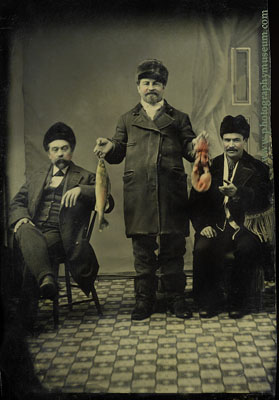 |
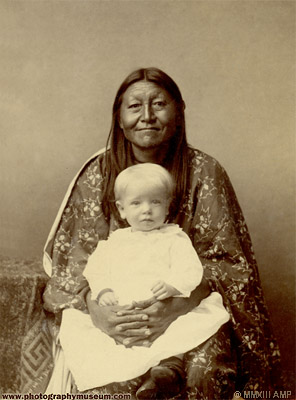
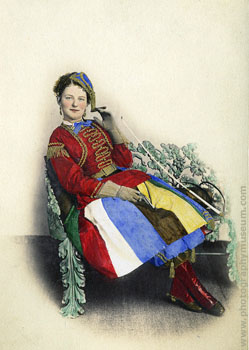
| George H. Dresser (1854 – 1912), Winfield, Kansas: Native American with Blonde Child. Albumen print cabinet card (4.5 x 6 inches), after 1883 | Henry Pollock, Baltimore, Maryland: Sallie H. White as a Vivandiere, holding a cigar and a pistol. Tinted albumen print cabinet card, (4.5 x 6 inches), 1870 | Unidentified Photographer: Three men with fish and lobster. Tintype, approximately 3 x 4 inches, circa 1890 |
| A 328-page book with 250 color illustrations, including all 220 images in this exhibition, is published by Mare & Martin of Paris in both French and English editions, titled Daguerre’s American Legacy/L’Heritage de Daguerre en Am�rique. The book is co-written by the exhibition’s curators, Fran�ois Brunet, Professor of American Art and Literature at the University of Paris – Diderot, and Wm. B. Becker, director of the American Museum of Photography. The photographs in the exhibition are selections from the Collection of Wm. B. Becker. |
| The exhibit and book are supported by the Conseil g�n�ral du Val-de-Marne, the cities of Bry-sur-Marne and Lagny-sur-Marne and the Soci�t� Bryarde des Arts et des Lettres, in conjunction with funding provided by the Laboratoire de recherches sur les cultures anglophones of Universit� Paris Diderot and the Institut Universitaire de France. Additional support was provided by the Terra Foundation for American Art and the Cultural and Educational Affairs Section of the United States Embassy in France. |
| |
 |
|
| Visit the US-based Daguerreian Society – Dedicated to the History, Science and Art of the Daguerreotype | Click here for the Society’s home page (opens in a new browser window) |
|
Click the museum’s logo for our home page, or select another feature below:

-
Copyright � MMXIII The American Photography Museum, Inc. All Rights Reserved. -
“American Museum of Photography” and the logo are Service Marks of The American Photography Museum, Inc.